Nuclear disasters and reactor meltdowns represent some of the most dramatic and consequential engineering failures in modern history. Understanding what went wrong at sites like Chernobyl, Fukushima, and Three Mile Island requires a clear grasp of nuclear reactor physics, safety system design, and the cascading human and mechanical failures that can turn a controlled reaction into a catastrophe. These events have shaped global energy policy, reactor design standards, and public perception of nuclear power for decades.
How Nuclear Reactors Work — And What Can Go Wrong
At the core of every nuclear power plant is a process called fission: the splitting of heavy atomic nuclei, typically uranium-235 or plutonium-239, which releases enormous amounts of heat. That heat converts water into steam, which spins turbines to generate electricity. The reaction is controlled using materials that absorb neutrons — most commonly boron or hafnium control rods — which can be inserted or withdrawn to regulate the rate of fission.
A reactor meltdown occurs when this cooling and control system fails. Without adequate cooling, fuel rods overheat, eventually melting the reactor core. In the worst cases, this leads to explosions, the release of radioactive materials, and long-term contamination of surrounding land and water. The severity of a nuclear incident is measured on the International Nuclear Event Scale (INES), which runs from Level 1 (minor anomaly) to Level 7 (major accident). Only two events in history have reached Level 7: Chernobyl and Fukushima.
Chernobyl (1986): The World's Worst Nuclear Disaster
The explosion at Unit 4 of the Chernobyl Nuclear Power Plant in Soviet Ukraine on April 26, 1986, remains the most catastrophic nuclear accident in history. The disaster was the product of a flawed reactor design combined with serious violations of operating procedures during a safety test.
The RBMK Reactor's Fatal Flaw
The Chernobyl plant used a Soviet-designed reactor known as the RBMK-1000. Unlike Western light-water reactors, the RBMK used graphite as a moderator to sustain the fission chain reaction, while using water as a coolant. This design had a critical and poorly understood flaw called a 'positive void coefficient.' When cooling water turned to steam (or voided), instead of slowing the reaction as it would in Western designs, the RBMK actually sped it up. This created a dangerous positive feedback loop.
The Night of the Explosion
On April 25–26, operators were running a test to determine whether the turbines could generate enough power to operate the reactor's cooling pumps during a brief power outage. During the test, the reactor's power dropped unexpectedly to near zero. Operators attempted to restore power by withdrawing nearly all control rods — a violation of safety protocols. When they finally initiated the shutdown test, a sudden uncontrolled power surge sent the reactor to perhaps 30,000 megawatts of thermal power, ten times its design capacity, in a matter of seconds.
Two explosions followed in rapid succession. The first was a steam explosion that blew the 1,000-tonne reactor lid off the building. The second, likely a prompt criticality excursion or a hydrogen explosion, scattered burning reactor graphite across the plant grounds. The graphite fire burned for ten days, releasing a plume of radioactive particles across Europe. Around 134 plant workers and firefighters suffered acute radiation syndrome; 28 died within months. The long-term death toll from radiation-related cancers remains a subject of scientific debate, with estimates ranging from thousands to tens of thousands.
Three Mile Island (1979): America's Wake-Up Call
The partial meltdown at Three Mile Island Unit 2 in Pennsylvania on March 28, 1979, was the worst nuclear accident in United States history, though it resulted in no direct deaths. The event exposed deep weaknesses in reactor control room design, operator training, and emergency communication.
A Stuck Valve and a Cascade of Confusion
The accident began when a pressure relief valve opened to reduce reactor pressure — as designed — but then failed to close again. Critically, the control room indicator light showed the valve had been commanded to close, not that it had actually closed. Operators, believing the system was functioning correctly, misread the signs of a coolant loss and actually reduced emergency cooling water to the core, making the situation worse.
Without adequate cooling, roughly half of the reactor core melted over several hours. Hydrogen gas accumulated inside the containment building, causing brief panic over a possible explosion. However, the containment structure held, and the release of radioactivity to the surrounding environment was relatively limited. Nevertheless, the accident prompted sweeping reforms to reactor operator training, emergency procedures, and control room design across the American nuclear industry.
Fukushima Daiichi (2011): The Tsunami That Broke the Backup Systems
On March 11, 2011, a magnitude 9.0 earthquake struck off the northeastern coast of Japan, triggering a massive tsunami. The earthquake itself caused the automatic shutdown of three operating reactors at the Fukushima Daiichi plant — exactly as designed. The disaster that followed was not caused by the earthquake, but by what came next.
When the Backups Fail
The tsunami waves, reaching up to 15 meters in height, overwhelmed the plant's 5.7-meter seawall and flooded the facility. The flooding knocked out the diesel backup generators that were supposed to power the emergency cooling systems during the blackout caused by the earthquake. Without electricity, operators could not pump cooling water to the reactor cores. Over the following days, the fuel rods in three reactors overheated, leading to partial or full meltdown and the buildup of hydrogen gas.
Hydrogen explosions blew apart the outer buildings of Units 1, 3, and 4. Reactors 1, 2, and 3 each experienced core damage. Significant quantities of radioactive materials, including cesium-137 and iodine-131, were released into the atmosphere and the Pacific Ocean. Approximately 154,000 residents were evacuated from the surrounding area. While no direct deaths from radiation exposure have been confirmed, the disaster had profound economic, psychological, and public health consequences for Japan.
Lessons from Fukushima
Fukushima demonstrated that even well-designed modern reactors with multiple redundant safety systems can fail when a single, poorly anticipated external event disables all backup systems simultaneously. Post-Fukushima reforms have focused on improving passive cooling systems that do not require external power, raising tsunami barriers, and improving international nuclear safety cooperation.
Other Notable Nuclear Incidents
Beyond the three headline events, history includes several other serious nuclear accidents worth understanding:
- Kyshtym, Soviet Union (1957): An explosion at a nuclear waste storage facility in the Ural Mountains contaminated vast areas of land. Rated Level 6 on the INES scale, it was kept secret by the Soviet government for decades.
- Windscale, United Kingdom (1957): A fire in a British plutonium production reactor released radioactive contamination across parts of the UK and Europe. It has since been reclassified as a Level 5 event.
- SL-1, Idaho, USA (1961): A prompt criticality accident at an experimental reactor killed three military operators — the only fatalities from a nuclear reactor accident in U.S. history.
- Tokaimura, Japan (1999): Workers at a uranium reprocessing facility accidentally created an uncontrolled criticality by mixing too much uranium solution by hand, exposing dozens of workers and killing two.
Why Reactor Design Matters So Much
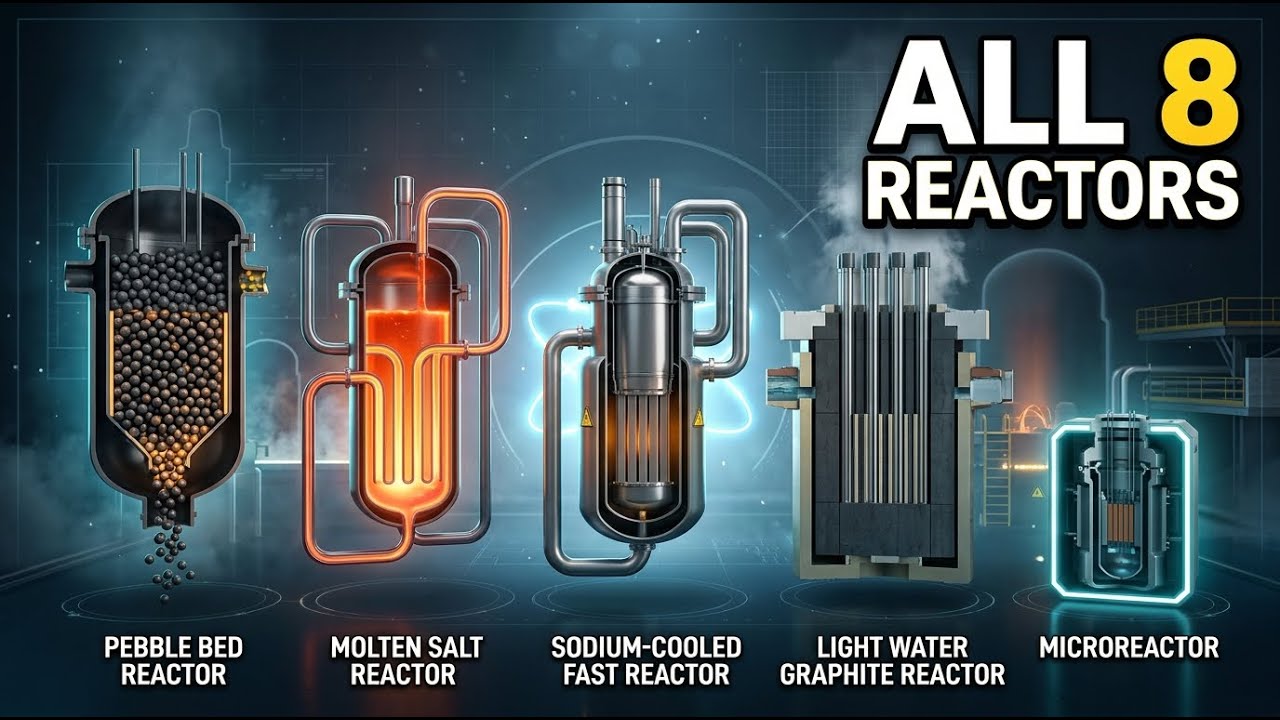
The contrast between these accidents reveals how profoundly reactor design affects safety outcomes. The RBMK's positive void coefficient made Chernobyl's runaway reaction physically inevitable once certain conditions were met. Modern light-water reactors, by contrast, have a negative temperature coefficient — if they overheat, the reaction naturally slows. This 'passive safety' principle has been extended further in Generation IV reactor designs, which aim to be inherently safe without relying on operator action or active mechanical systems at all.
The nuclear disasters of the 20th and early 21st centuries have, paradoxically, produced some of the most rigorous safety improvements in engineering history. Each meltdown has been studied exhaustively, and the lessons embedded into updated codes, designs, and operator training represent a form of hard-won institutional knowledge that continues to shape energy infrastructure worldwide.