Aircraft come in a stunning variety of shapes, sizes, and configurations, each designed around specific aerodynamic, mechanical, or buoyancy principles. Whether you are curious about how a hang glider stays aloft without an engine, how a helicopter hovers in place, or why airships nearly vanished after the Hindenburg disaster, understanding the full spectrum of aircraft types reveals the remarkable ingenuity behind human flight. This guide covers every major aircraft category, from the simplest unpowered gliders to the most complex rotary-wing machines and lighter-than-air giants.
Fixed-Wing Aircraft: The Aerodynamic Foundation
Fixed-wing aircraft are the most common type of airplane encountered today. They generate lift by moving a rigid wing through the air, exploiting the pressure difference between the upper and lower wing surfaces described by Bernoulli's principle and Newton's third law. As air accelerates over the curved upper surface of an airfoil, pressure drops, while slower air beneath the wing creates higher pressure — the net upward force is lift.
Gliders and Sailplanes
Gliders are unpowered fixed-wing aircraft that rely entirely on the conversion of gravitational potential energy into forward motion and lift. Once towed aloft or launched from a hillside, a glider pilot seeks rising columns of warm air called thermals to gain altitude and extend flight time. High-performance sailplanes — the engineered descendants of early gliders — achieve glide ratios exceeding 60:1, meaning they travel 60 meters forward for every meter of descent. Their long, slender wings minimize induced drag, and some competition sailplanes can cruise at over 300 km/h.
Powered Propeller Aircraft
Adding an engine and propeller to a fixed-wing design transforms a glider into a powered airplane. Piston-engine aircraft, like the iconic Cessna 172, use a rotating propeller to generate thrust by accelerating a mass of air rearward. The propeller itself is essentially a rotating wing, generating lift in the horizontal direction. Turboprop aircraft replace the piston engine with a gas turbine, which is far more efficient at higher altitudes and speeds, making them popular for regional airliners and military transports.
Jet Aircraft
Jet aircraft use the principle of reaction propulsion. A turbojet or turbofan engine compresses incoming air, mixes it with fuel, ignites the mixture, and expels hot gases rearward at high velocity. By Newton's third law, the aircraft is pushed forward. Turbofan engines — the standard for modern commercial airliners — route a large volume of bypass air around the combustion core, dramatically improving fuel efficiency and reducing noise. Supersonic jets, like the retired Concorde, push past Mach 1, creating a shock wave that produces a distinctive sonic boom.
Rotary-Wing Aircraft: Masters of Vertical Flight
Where fixed-wing aircraft need a runway and forward velocity to generate lift, rotary-wing aircraft generate lift by spinning their wings — the rotor blades — overhead. This allows them to take off and land vertically, hover in place, and fly in any horizontal direction.
Helicopters
A helicopter's main rotor produces both lift and thrust by varying the pitch angle of the blades as they spin. The pilot uses a collective control to change all blade pitches simultaneously — raising the collective increases lift — and a cyclic control to tilt the rotor disc, directing thrust forward, backward, or sideways. Because the spinning rotor creates a torque reaction on the fuselage, most helicopters use a tail rotor spinning on a vertical axis to counteract this effect and allow directional control. Some designs, like the Chinook tandem-rotor helicopter, use two counter-rotating main rotors instead, canceling each other's torque.
Autogyros
An autogyro — also called a gyroplane — is a hybrid design. It uses an unpowered, freely spinning rotor to generate lift through autorotation, while a conventional engine and propeller provide forward thrust. Unlike a helicopter, the rotor is not driven by the engine during normal flight. This makes autogyros mechanically simpler and gives them remarkable slow-speed stability, though they cannot hover. They were an early stepping stone in the development of rotary-wing aviation during the 1920s and 1930s.
Tiltrotor Aircraft
Tiltrotor aircraft, most famously the Bell Boeing V-22 Osprey, combine the vertical flight capability of a helicopter with the high-speed cruise performance of a turboprop airplane. Two large rotors are mounted at the ends of fixed wings on nacelles that can rotate 90 degrees. During takeoff and landing, the rotors point upward like helicopter rotors; once airborne, they tilt forward to act as propellers. This gives the Osprey a top speed nearly twice that of a conventional helicopter.
Lighter-Than-Air Aircraft: Buoyancy in the Sky
Rather than generating lift aerodynamically, lighter-than-air aircraft achieve buoyancy by displacing a volume of air that weighs more than the aircraft itself. This is the same principle that keeps a ship afloat — Archimedes' principle applied to the atmosphere.
Hot Air Balloons
Hot air balloons are the oldest successful human flight technology, first flown by the Montgolfier brothers in 1783. A large fabric envelope traps heated air, which is less dense than the surrounding atmosphere, creating a net upward buoyant force. A burner beneath the envelope heats the air to control altitude. Because balloons travel with the wind rather than against it, directional control is limited to finding wind currents at different altitudes that blow in the desired direction.
Gas Balloons
Gas balloons use a lifting gas — historically hydrogen, now typically helium — that is inherently less dense than air. Because no heating is required, gas balloons can remain aloft for extraordinary periods. Modern scientific and stratospheric research balloons made of thin polyethylene film can carry instrument payloads to altitudes above 40 km, well into the stratosphere, where they expand enormously as atmospheric pressure drops.
Airships
Airships, or dirigibles, are steerable lighter-than-air craft that add engines and control surfaces to a balloon envelope. They come in three structural types: non-rigid blimps, which rely on internal gas pressure to maintain shape; semi-rigid designs with a partial internal keel; and rigid airships, like the famous Zeppelin series, which use an internal metal skeleton covered by fabric. Rigid airships were the largest flying machines ever built — the Hindenburg stretched 245 meters in length. The catastrophic 1937 Hindenburg fire, caused by the ignition of its hydrogen lifting gas, effectively ended the era of large passenger airships. Modern blimps, filled with non-flammable helium, continue to serve as advertising platforms and surveillance platforms.
Specialized and Emerging Aircraft Categories
Flying Boats and Seaplanes
Seaplanes replace conventional landing gear with floats, allowing operation from water surfaces. Flying boats integrate the hull itself as the buoyant structure. These aircraft were vital during the early 20th century for intercontinental travel before long-range land runways existed, and they remain essential for accessing remote lakes and rivers.
Ground Effect Vehicles
Ground effect vehicles, sometimes called ekranoplans, fly extremely close to a surface — usually water — where the interaction between the wings and the ground traps a cushion of high-pressure air beneath the aircraft, dramatically reducing induced drag. The Soviet Union developed massive ekranoplans during the Cold War capable of carrying hundreds of troops at very high speeds just meters above the Caspian Sea. They occupy a fascinating boundary between ship and aircraft.
Unmanned Aerial Vehicles
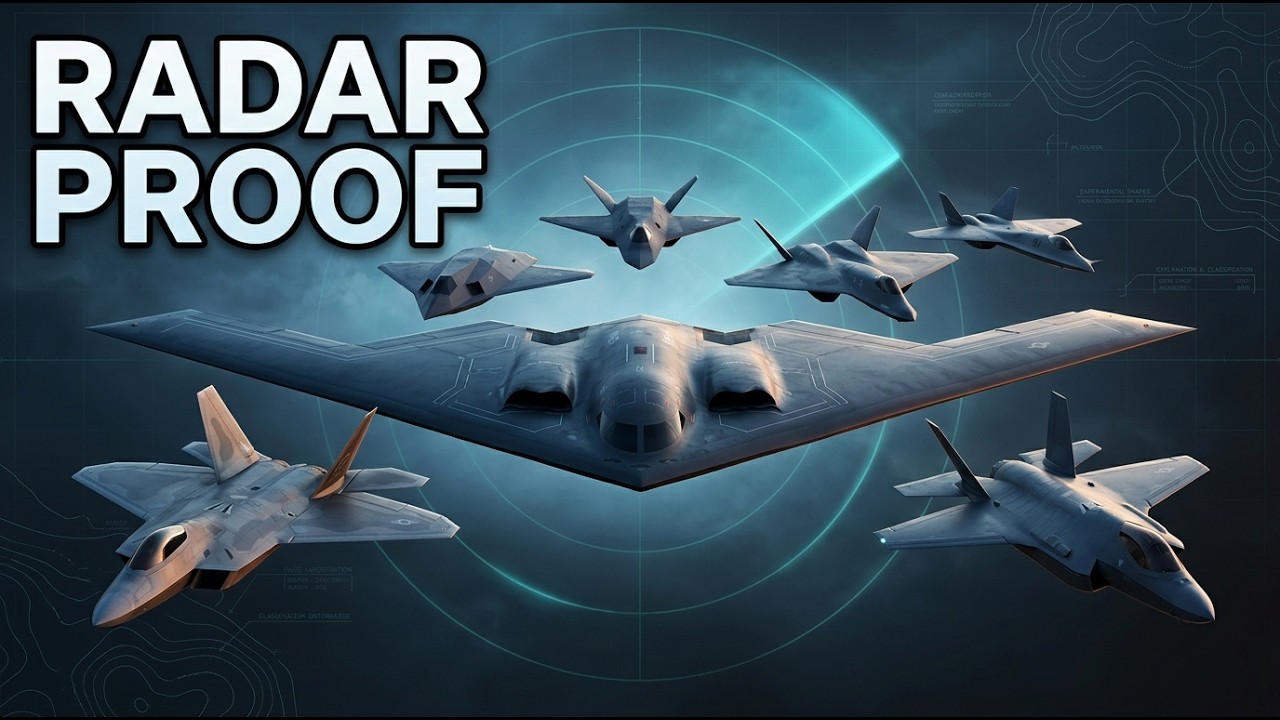
Unmanned aerial vehicles, or drones, span nearly every category described above — from fixed-wing surveillance drones to multirotor quadcopters that work on the same principle as helicopters. Consumer quadcopters use four independently controlled rotors to manage lift, pitch, roll, and yaw entirely through differential rotor speed, with no mechanical swashplate required. Military UAVs range from small hand-launched reconnaissance platforms to jet-powered stealth aircraft with wingspans comparable to manned fighters.
What Makes Each Aircraft the Right Tool?
No single aircraft type dominates all missions. Gliders excel where silence and thermal soaring are the goal. Jet airliners dominate long-haul passenger transport because of their speed and efficiency at altitude. Helicopters are irreplaceable for search and rescue, offshore oil platform operations, and urban medical evacuation because of their ability to hover and land without a runway. Airships, despite their chequered history, are experiencing a revival as researchers explore their potential for heavy cargo transport and persistent surveillance, since their slow speed and enormous payload capacity suit missions where neither runway infrastructure nor urgency is a constraint. Understanding the engineering trade-offs behind each aircraft type illuminates why the sky is filled with such a diverse fleet of flying machines.